
Artificial Intelligence
⊹
Design
⊹
Strategy

Verena Ploberger
Head of Agency
The world of marketing has changed dramatically in recent years thanks to Artificial Intelligence. With just one click, images, videos, or texts are created without being directly shaped by any human hand. Yet, as impressive as these technologies are, they also raise some legal questions – especially when it comes to image and video rights. What does it mean to use AI-generated content in advertising? Where do the legal pitfalls lie? And how do we handle this as an agency? Let us dive deep into these questions.
Copyrights:
Who is the Creator of the Image?
Who actually owns the copyright of an image or video created by an AI? In Austria, copyright law states that a work is only protected if it results from personal intellectual creation (§ 1 Abs. 1 UrhG). Since AI usually generates an image without direct human input, the question arises: who is the "mother" of the work? The answer is simple – nobody. This is because AI does not have an "intellectual" creator in the traditional sense.
For us as an advertising agency, this means that AI-generated content is generally not protected by copyright. At first glance, this sounds tempting – after all, it could mean that we can access such content at will. But that is only half the story. The advantage is that AI-generated images and videos are basically free to use. But watch out: there is still a catch.
The Danger of Unintentional Copyright Infringement
While AI gets "creative" by using existing works as training data, there is a sneaking danger that the AI might unintentionally replicate copyrighted elements. Imagine an AI generating an image that looks strikingly similar to a famous photo or piece of art – without consciously copying it. Even if human influence is minimal, this could lead to a copyright infringement, especially if the AI was trained on copyrighted content.
Another risk is the violation of trademark or publicity rights, for example, if the AI depicts well-known brand logos or celebrities in its images. Since AI systems recognize and reproduce patterns, they could unintentionally generate depictions of brands or people that are legally problematic.
Our Responsibility:
Creativity with Care and Transparency
With the introduction of the AI Act by the European Union, there are now clear rules for the use of Artificial Intelligence for the first time – also in the creative industry. This regulation aims to ensure that AI technologies are used responsibly and do not pose risks to fundamental rights, security, or intellectual property. As an advertising agency, we have consciously aligned our guidelines with this new legal framework to work not only creatively but also with full legal backup.
Use as a tool, not a replacement: For us, AI is never the final product, but a creative tool. We rely on AI to gather inspiration and generate initial drafts, which we then refine with our own ideas and adjustments. This results in unmistakable designs that do not end up in the "mainstream" but carry the unique signature of our agency.
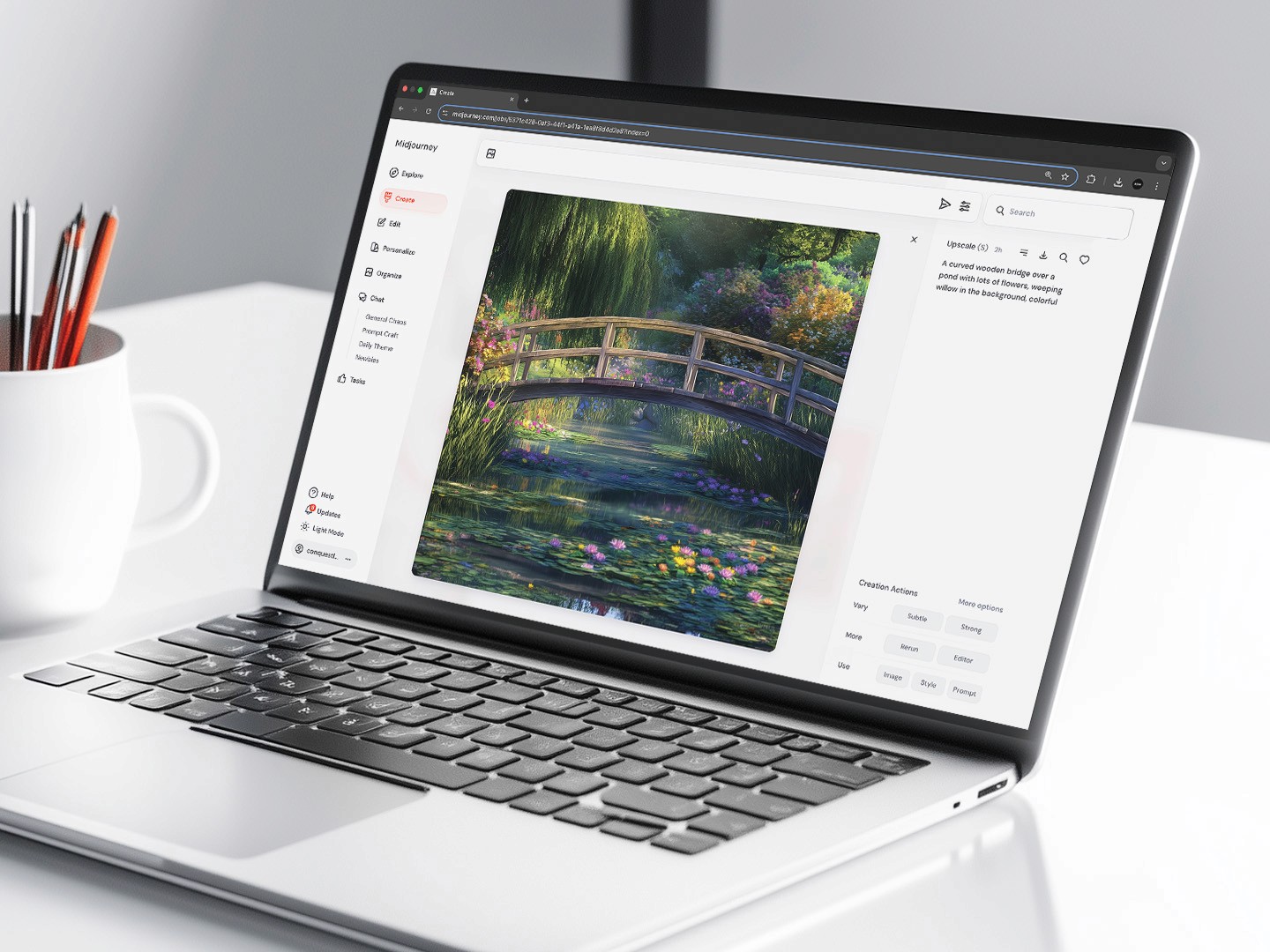
Responsible choice of topics: We make sure to work with universal and non-critical motifs – landscapes, abstract designs, and mood images are our preferred choice. We consciously avoid topics that involve trademark or publicity rights.
Transparency with clients: When communicating with our clients, we value honesty and openness. We inform our partners about the extent to which AI-generated content is used so that everyone is in the loop and no surprises lie ahead.
Continuous training: Since the legal landscape is constantly changing, regular training for our team is essential. The AI Act highlights the need to promote human-centric and trustworthy AI systems, making it even more important for us to always stay up-to-date. This is the only way we can ensure we offer our clients innovative and legally secure solutions.
Our Conclusion
AI-generated images and videos offer us exciting new opportunities as an advertising agency – but also challenges. The legal gray area surrounding copyright, publicity rights, and trademark rights is complex and demands a conscious, reflective approach. Through transparent communication, responsible selection, and continuous training, we can ensure that our clients receive not only creative but also legally secure content.
Share This Article


