Conquest Werbeagentur GmbH
Kürnbergblick 3
4060 Leonding
Conquest Werbeagentur GmbH
Kürnbergblick 3
4060 Leonding
We’ve all been there: you have an image in your head, but no time, no budget or simply no talent to visualize it. The creative spark is there, but there are often a few hurdles between imagination and visualization.
Luckily, this is precisely where new possibilities are opening up: tools that turn words into images – quickly, intuitively and surprisingly precisely. Text-to-image technology has long since arrived in the creative cosmos and is developing rapidly. Particularly exciting: integration directly in the dialog with ChatGPT. A new form of collaboration between man, machine – and of course: agency.
There are many tools on the market – Midjourney, Firefly, Stable Diffusion – all have their justification and certain strengths. But anyone who has ever tried to implement a specific idea with Midjourney knows that you quickly feel like a prompt poet or code tamer.
The image generator in ChatGPT is different. Here, image generation works like a conversation. No magical incantations or cryptic abbreviations. Bang – the tool understands you. It remembers what you built together. And it continues. No “restart”, no “reload upload”, no “change tool”. Just a natural dialog in which the idea becomes more and more concrete – just like you would brainstorm with a colleague from the creative team.
This fluent exchange is a real game changer. Because it makes it possible not only to “generate” images, but also to develop them together with the AI. And without having to attend prompt workshops or trawl through Reddit threads. Simply write what you think. And the tool responds – visually.
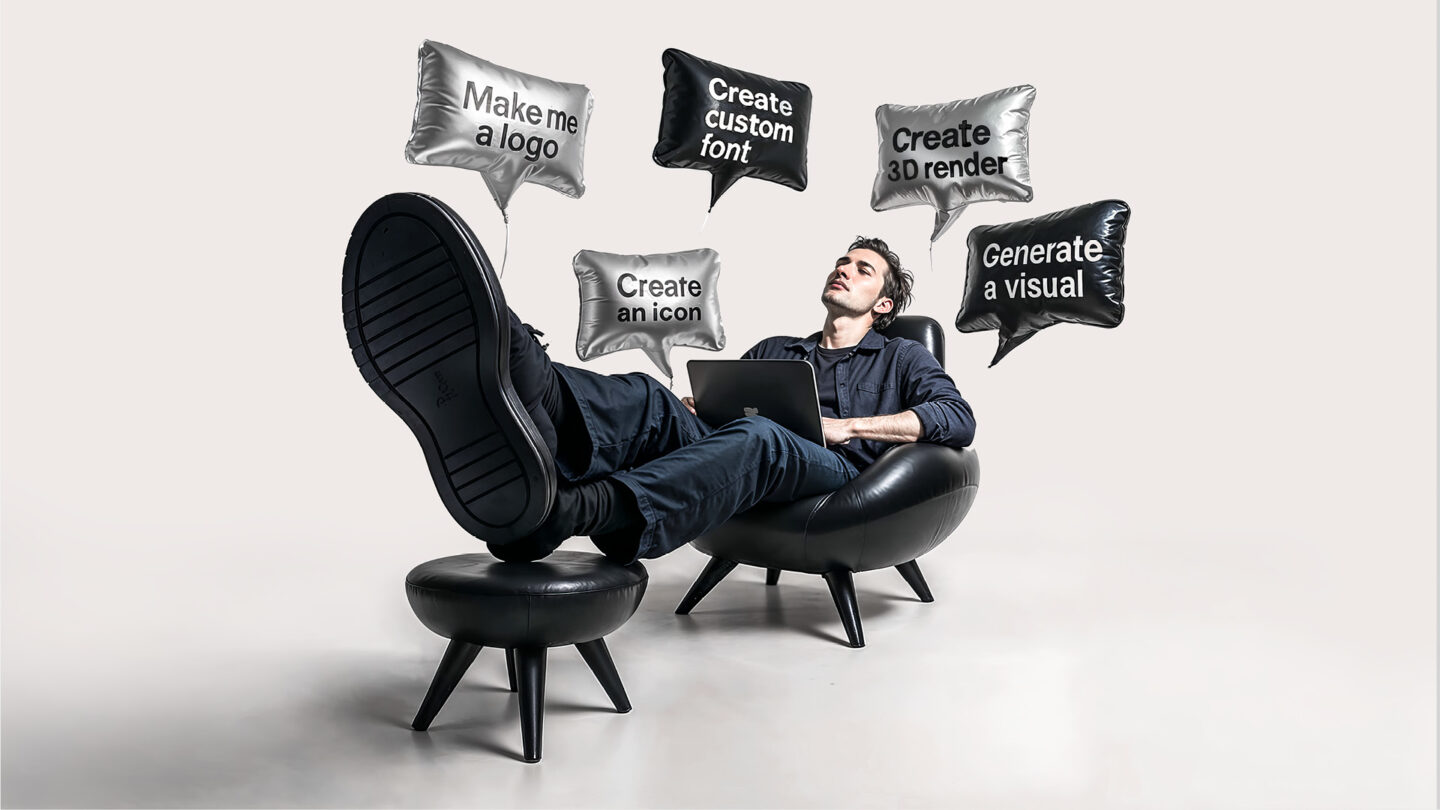
Sure, the theory sounds nice But we wanted to know: What can the new Image Generator really do? So we tested it – curiously, critically, with the typical agency perspective. Where does it save time? Where does it generate new ideas? And where does it (still) reach its limits? Here are a few examples – from impressive to “well, kinda”.
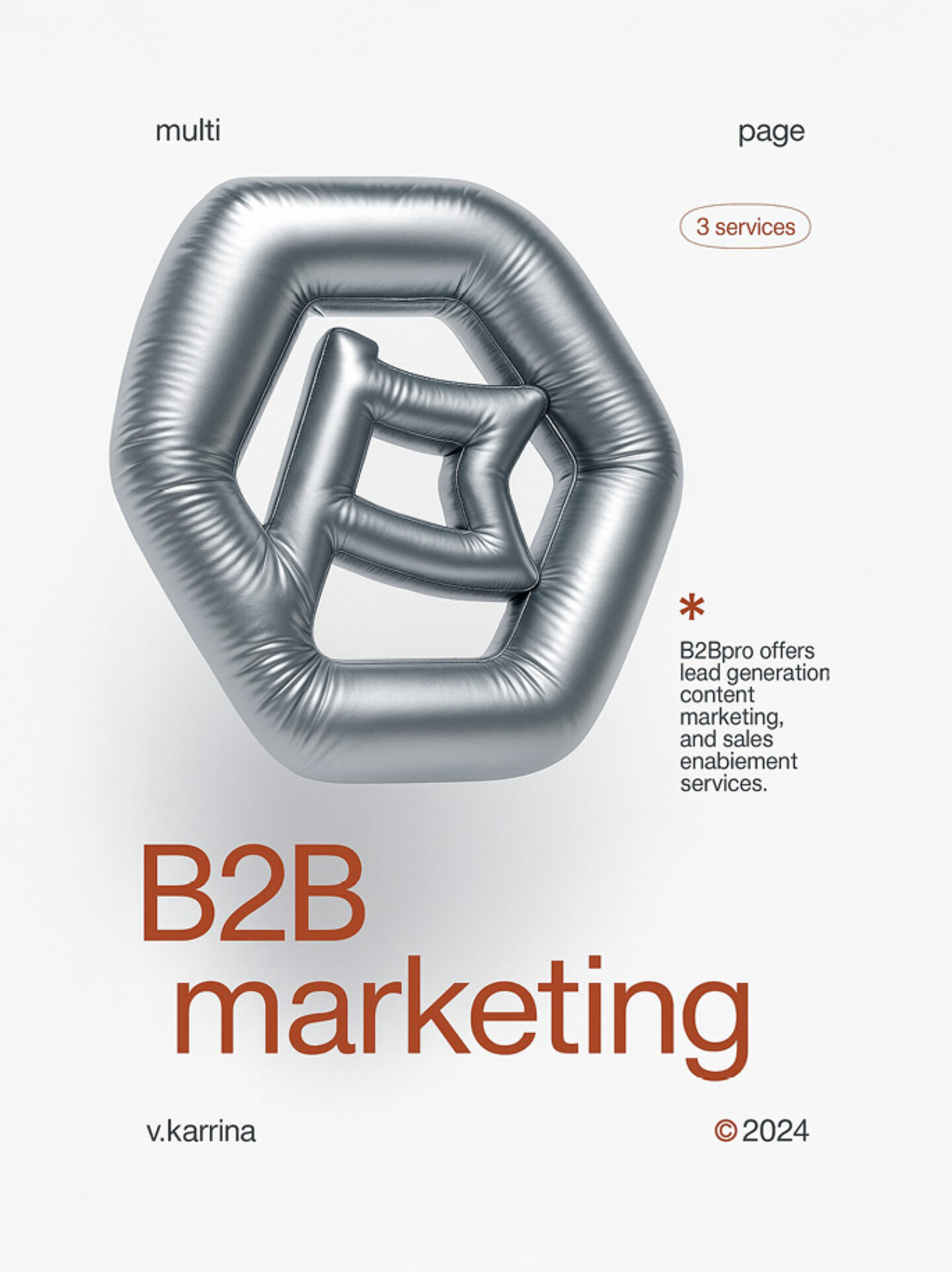
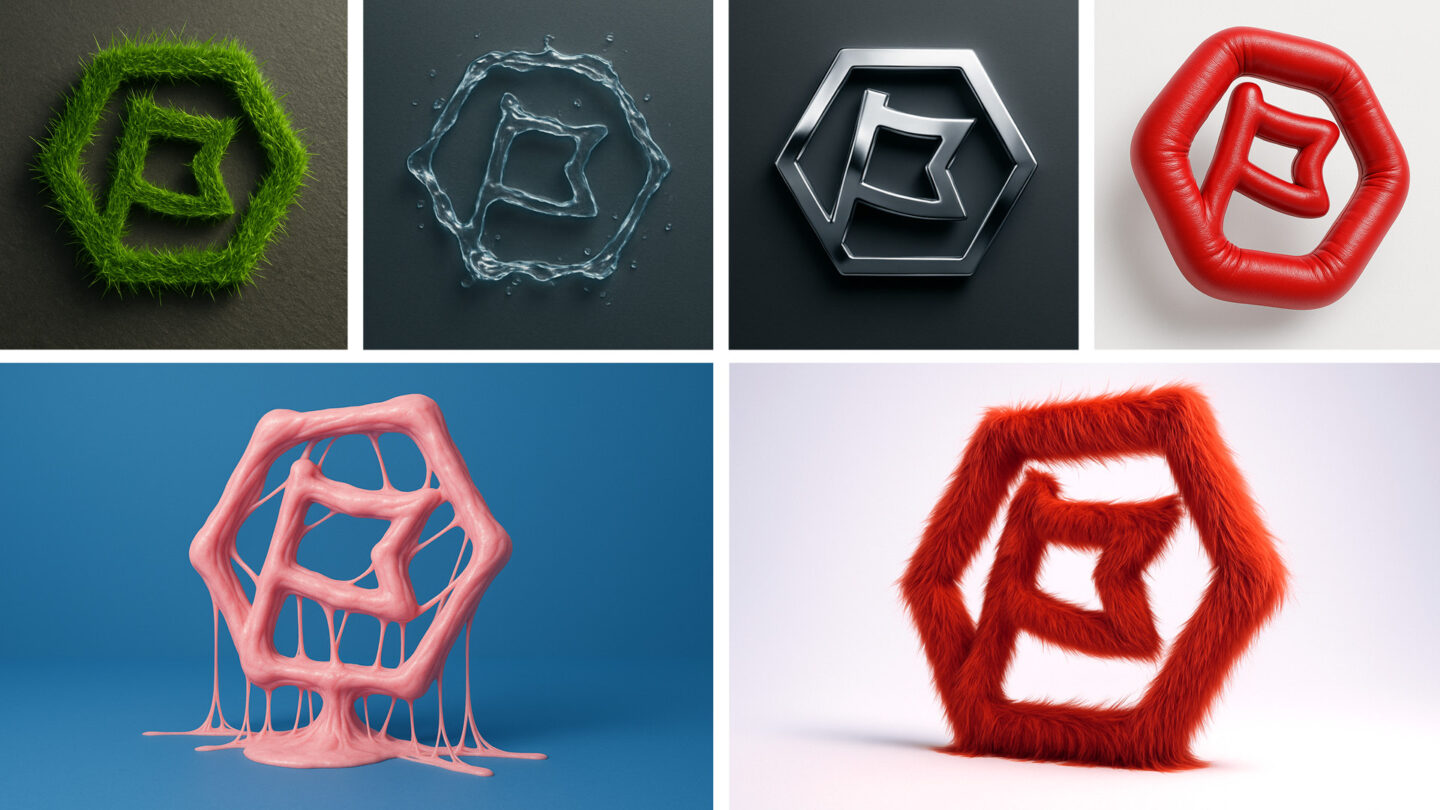
How versatile is a logo really? And how well does an AI understand our brand aesthetics? To find out, we had our agency logo translated into very different materials and textures – by text, of course. From shiny chrome and shaggy fur to water, grass or even pink chewing gum: the Image Generator delivered – and with an amazing sense of form, materiality and light. The outline of the logo remains clearly recognizable, but the look changes completely. An exciting use case for mood boards, style studies or quick visuals in the conception phase. Not a substitute for a well thought-out design system – but definitely a tool with creative added value.
What happens if you take an existing ad as a template – and have a new ad made from it? We tried it out: Uploaded the image, added the logo, added a few keywords about the look and feel. And lo and behold: the style of the original ad was adopted with astonishing precision. Color scheme, perspective, imagery – everything was consistent.
The integration of our logo worked surprisingly well. In contrast, the result for the supplementary texts was still mixed – here you can see that typographic sensitivity is not (yet) one of the AI’s greatest strengths. However, as a quick style test or visual concept board, the approach works surprisingly well.
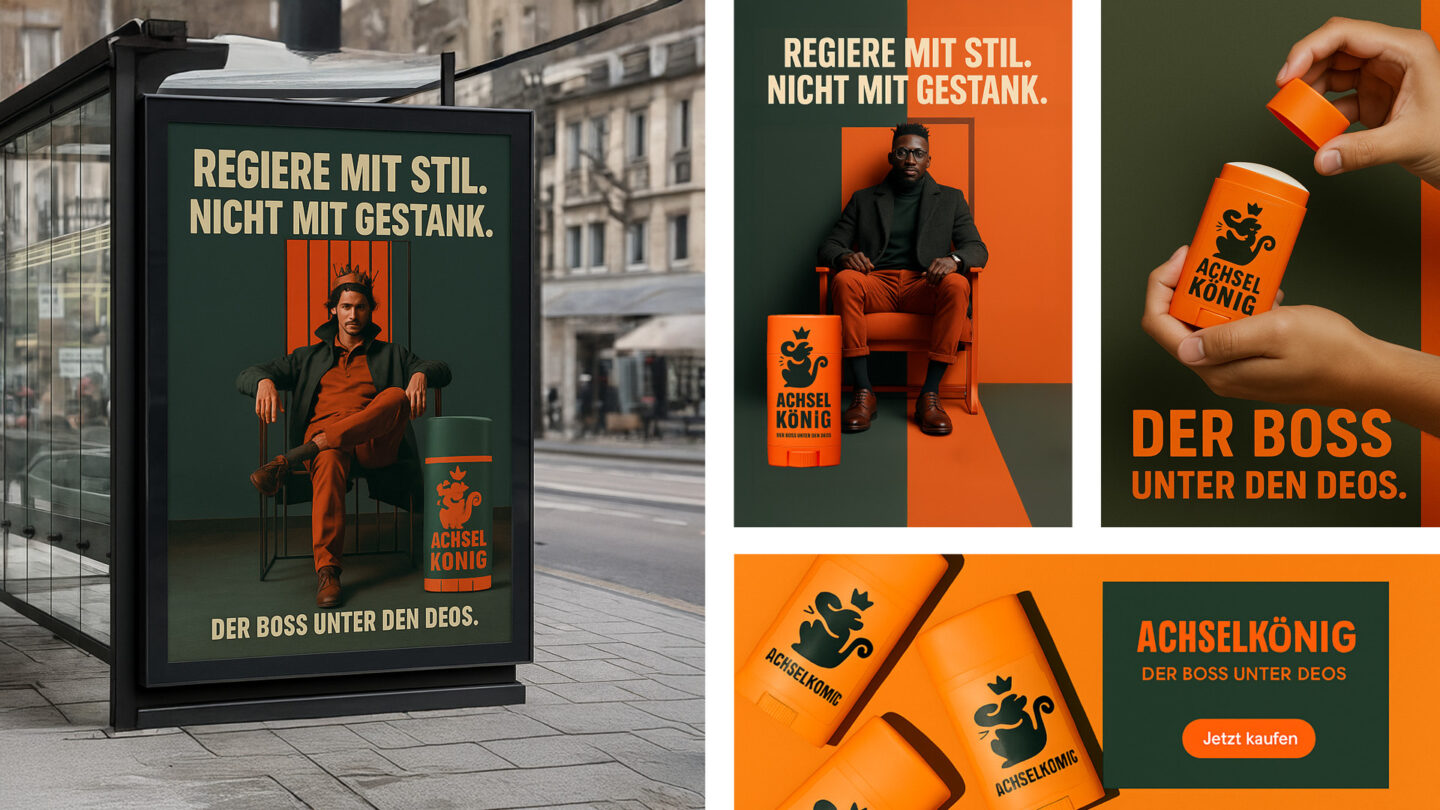
Now we wanted to find out: Can AI not only deliver individual images – but create the basis for an entire campaign? Our test object: a fictitious deodorant with the charming name Achselkönig (Armpit King). And the result? Surprisingly strong. The AI generated various visual approaches within a very short space of time. What was particularly exciting was that the motifs were not only beautiful, but also had real consistency, both as product staging or mood motif. It was also easy to generate a simple web presentation – not as a finished UI design, but as a visual direction that you can continue to work with. One thing is clear: AI is no substitute for holistic campaign development. But it provides an impressive starting point that makes ideas tangible – fast, versatile and with a surprising sense of style.
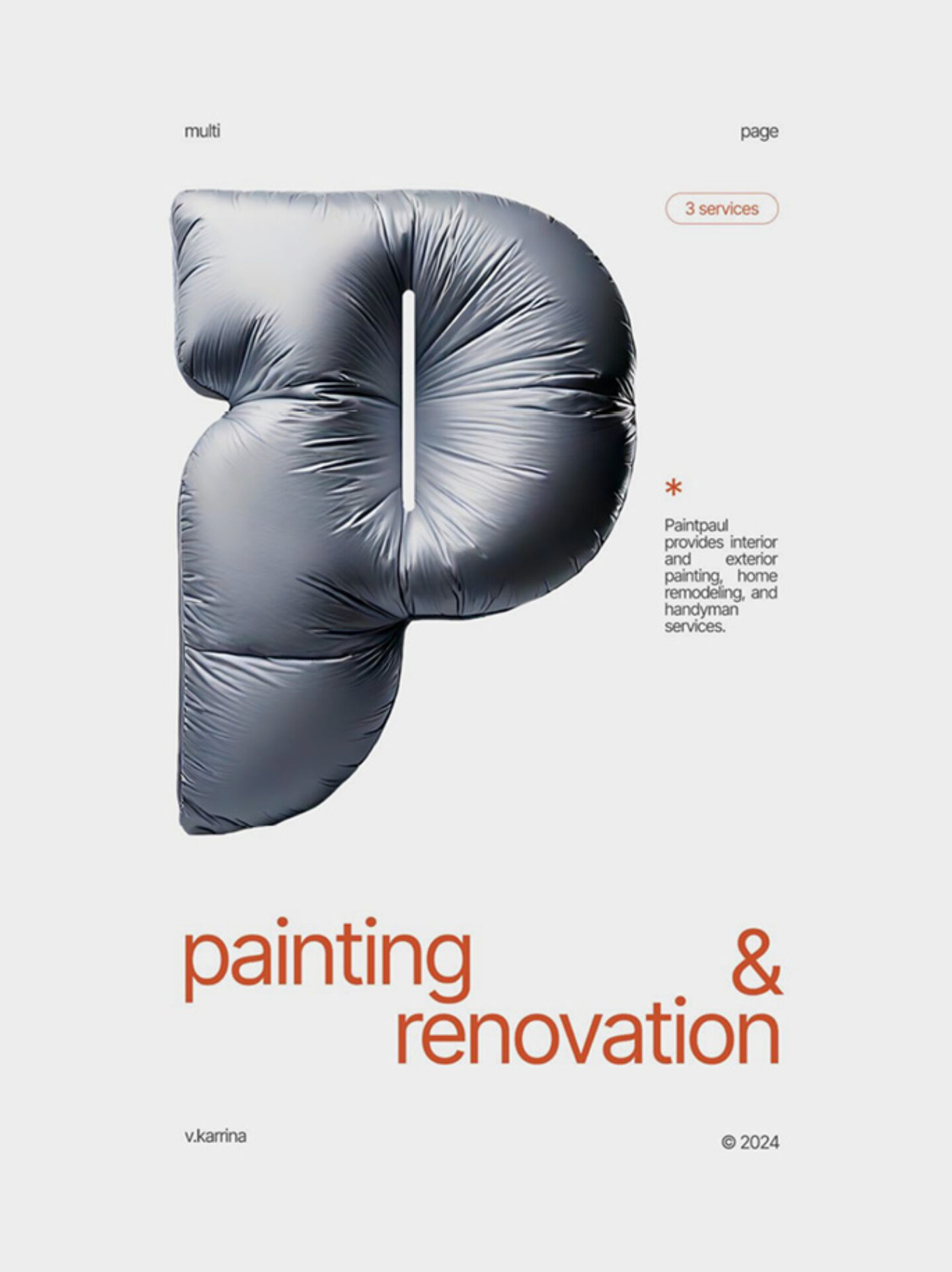
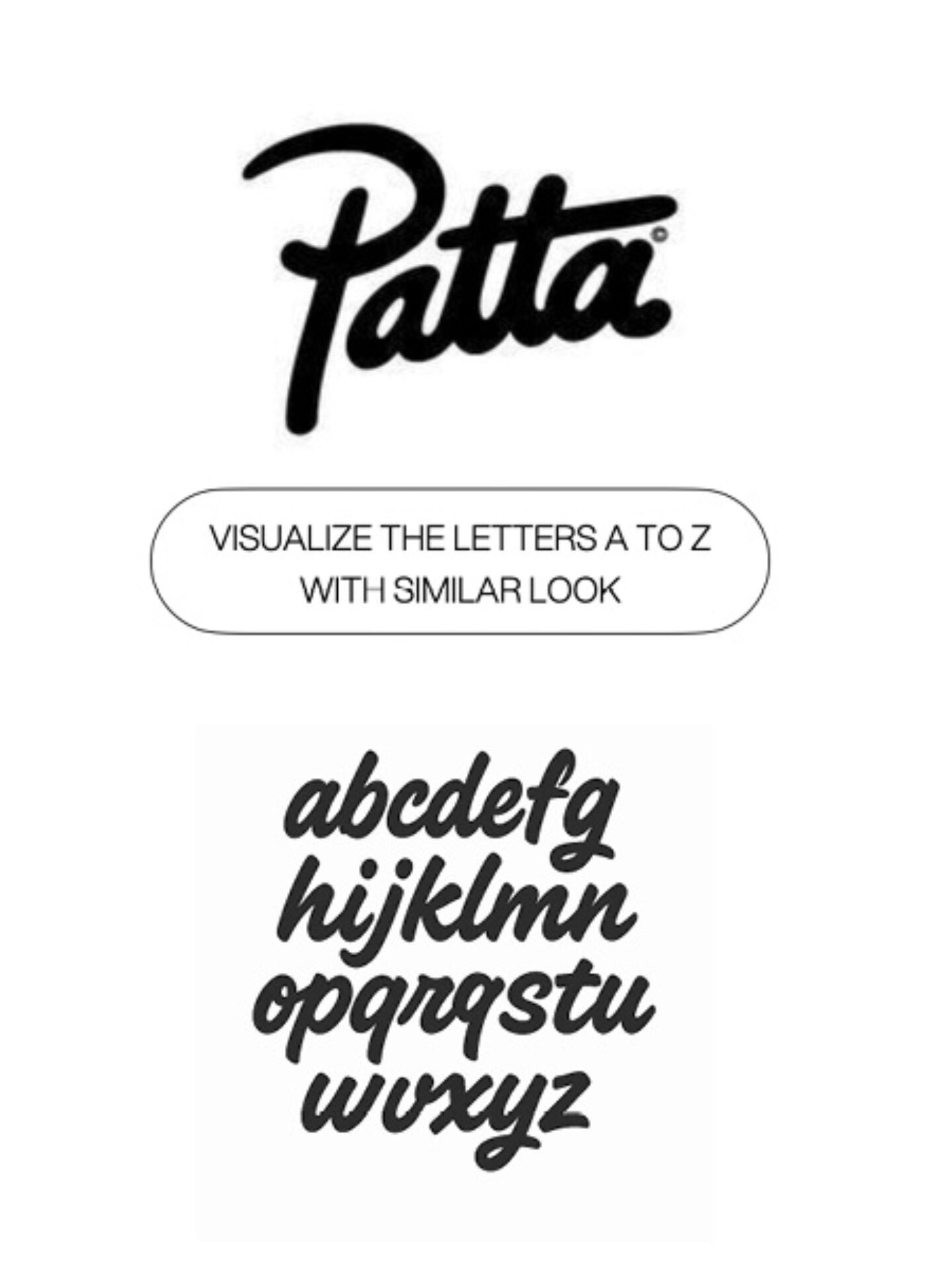
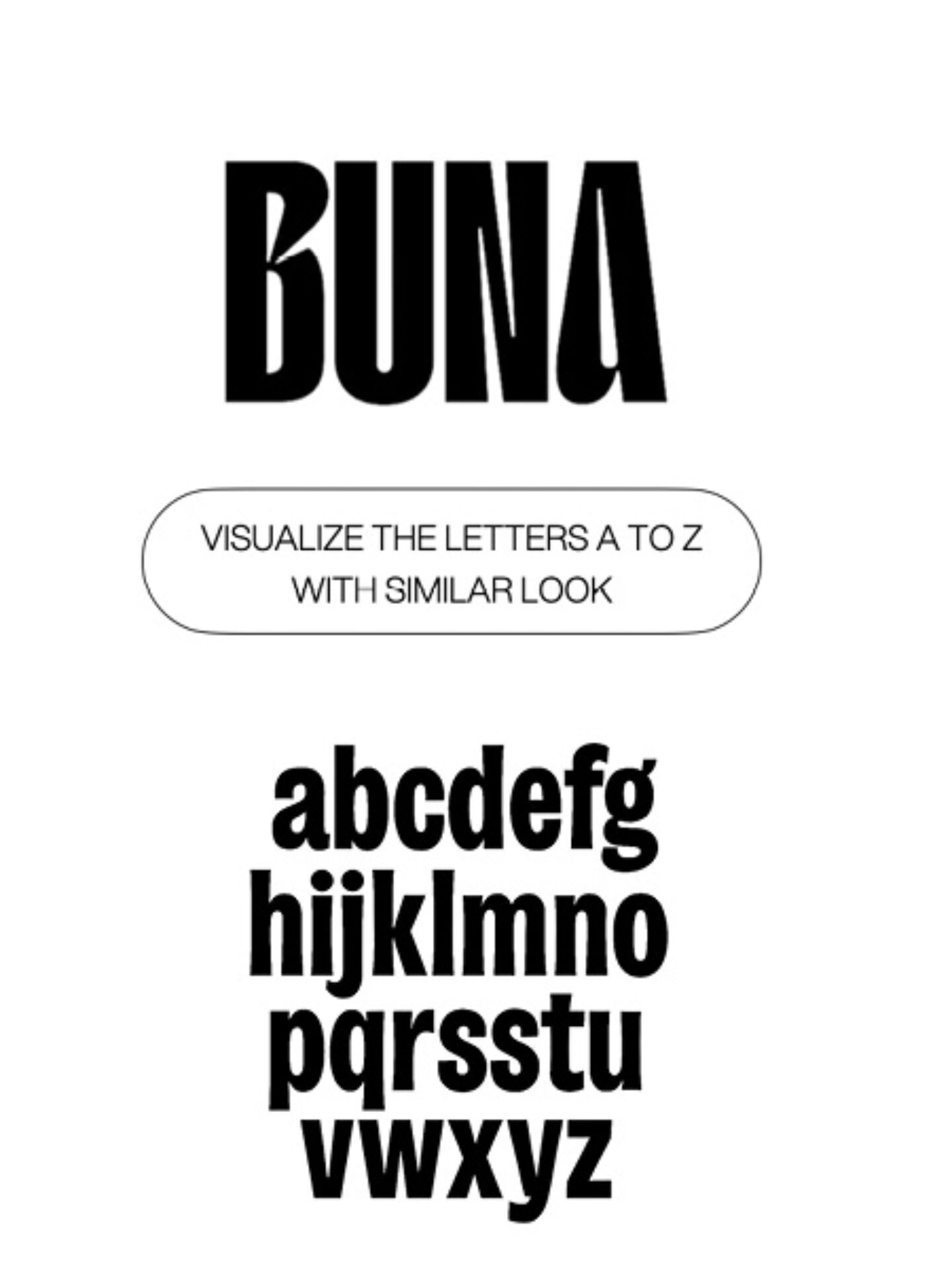
Finally, we set the AI a typographical challenge: Can it derive a kind of complete font from a single word – i.e. a font snippet? Our instruction: design all the letters so that they stylistically match the source word. The result? Not a complete font family, of course. But: a visual approximation that surprises. The AI has generated letters that have taken on the look and feel of the original surprisingly well – in terms of structure, design language and character. Some variants were closer, others more inspired than precise. But as a style or basis for a font concept? Absolutely usable.
"*" indicates required fields
When the spark ignites.
B2B marketing is supposedly all about facts, figures and data. Customers are often portrayed as rational and technically adept but unemotional. However, the idea that buyers and engineers leave their human nature at the factory door falls short. People are people even in B2B – and people are guided by emotions. Marketing expert Simon Sinek puts it in a nutshell: “People don’t buy products, they buy feelings.” Surprisingly, this statement not only applies to consumer goods such as chocolate or sneakers. The emotional component also plays an important role in the field of precision machines, software solutions or steel products.
People don’t buy products,
they buy feelings.
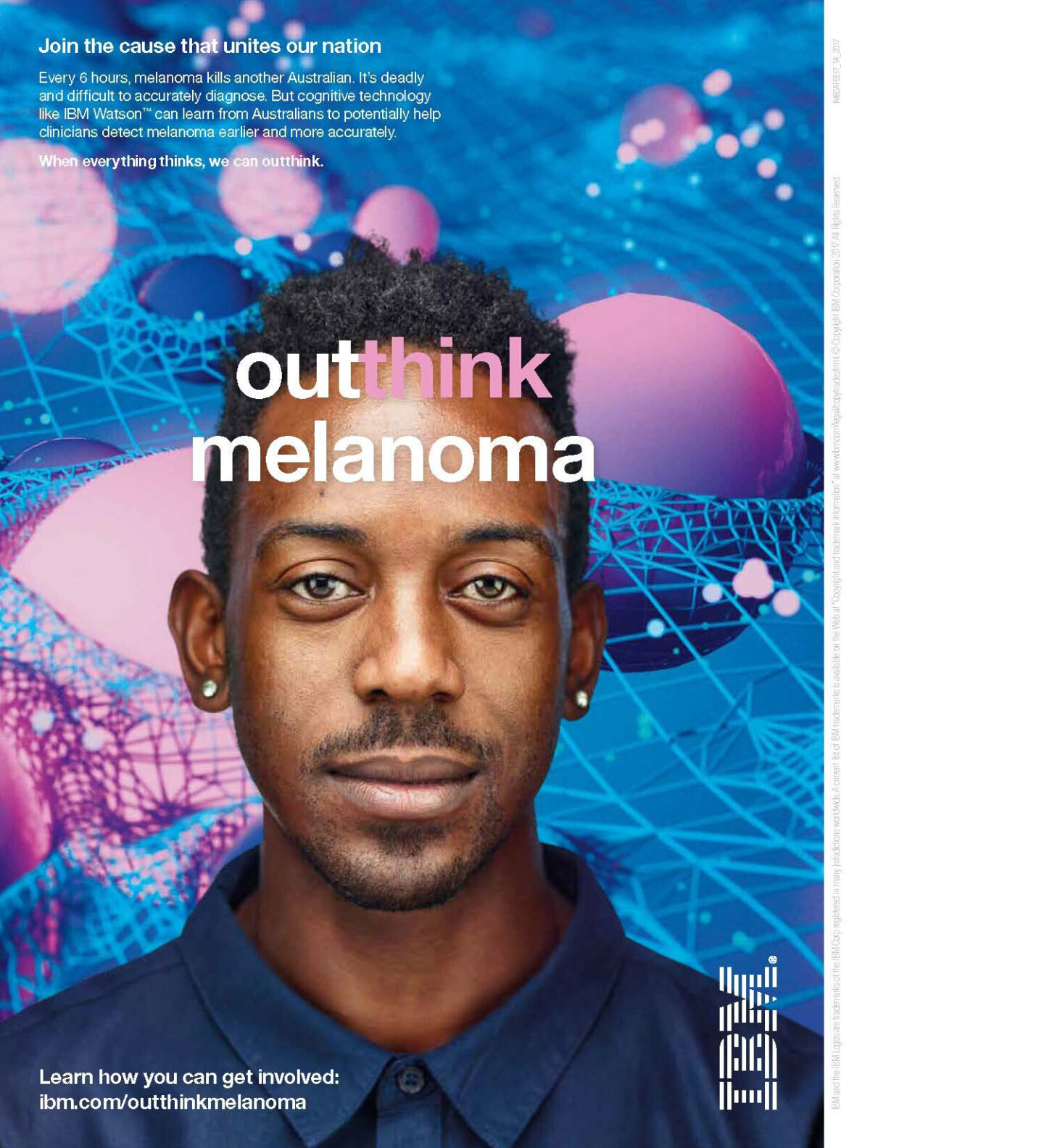
IBM “Outthink Melanoma”
Industry: IT / AI / Health
Why emotional: IBM Watson helps doctors to detect skin cancer early, potentially saving lives. This is not only technologically impressive, but also emotionally gripping.
Emotional lever: health, saving lives, innovation
Function: Positions IBM as a real problem solver with relevance for people and society.
Advertising agency: Ogilvy Australia
The myth that technology and emotion are incompatible persists – especially in the B2B environment. But in reality, emotional factors play a decisive role. It is not just product data and specifications that are convincing. Rather, it is the people behind the brand, their attitude, their values and the stories they tell. An authentic brand that shares experiences and stories sticks in your mind – and creates trust. Stories from real life are particularly effective: Customers who have overcome challenges, companies that act with attitude, visions that point beyond the product. This emotional level makes the difference – without losing sight of the technical requirements.
Magirus social media post “Woman Day”
Industry: Firefighting technology / Commercial vehicles
Why emotional: In this campaign, Magirus emphasizes the strength and determination of women who stand up to prejudice every day. The message: courage and competence are not gender-dependent.
Emotional lever: empowerment, equality, pride
Function: Strengthens the employer brand, promotes diversity and demonstrates social responsibility.
Advertising agency: Conquest
In marketing, milliseconds often decide whether a message is perceived – or overlooked. Graphic design plays a central role in this first, intuitive phase. A well thought-out visual concept attracts attention, arouses interest and opens the door to the actual message. Colors, shapes, typography and imagery have an emotional impact even before the content is consciously grasped. Good design arouses curiosity, conveys professionalism and facilitates access to complex topics. It reinforces the emotional appeal without diluting the factual core. This creates a balance: between feeling and understanding, between emotionality and technical precision – exactly what successful B2B communication is all about.
Cisco brand campaign “There’s Never Been a Better Time”
Industry: IT / Network technology
Why emotional: Cisco shows how technology can solve real problems – from education and health to sustainability. The focus is clearly on purpose and social impact.
Emotional lever: meaningfulness, belief in the future, social responsibility
Function: Cisco brings complex technology into a humanistic context and appeals to decision-makers who are not only interested in ROI but also in impact.
Advertising agency: Goodby Silverstein & Partners (GS&P)
A look at some outstanding campaigns reveals a common pattern: they all focus on human impact. Whether it’s IBM with its life-saving early skin cancer detection, Cisco with its vision of a better world through technology or GE addressing equality in the tech world – it’s not just about products. It’s about meaning.
These campaigns use emotionally charged narratives to bring technological topics to a personal, touching level. IBM creates closeness through the topic of health and saving lives – an emotional anchor that immediately generates relevance. Magirus and GE, on the other hand, pick up on deeply rooted social values: Empowerment, equality, the pursuit of justice. Their stories arouse pride, inspiration and identification. Cisco focuses on meaningfulness and social change, appealing specifically to people who see technology not just as a means to profit, but as a lever for progress and responsibility.
What all these campaigns have in common is the ability to combine technological expertise with genuine human added value. They don’t tell feature stories, but purpose stories – and thus strike a chord with the times. Because even in B2B, decisions are not made purely rationally. Anyone who wants to work with a brand wants to understand what it stands for.
And that only works with one thing: emotion.
General Eletrics: “What If Millie Dresselhaus, Female Scientist, Was Treated Like a Celebrity?” Industry: Industrial technology. Why emotional: This campaign shows a female scientist being celebrated like a pop star, bridging the gap between hard tech and social esteem. Emotional lever: Recognition, inspiration, pride. Function: Positions GE as a pioneer for equality and innovation. Advertising agency: BBDO New York
Emotions and B2B marketing are not mutually exclusive. On the contrary, they complement each other when stories are told are touching and facts are presented that are convincing at the same time. Well thought-out graphic design further enhances this effect and ensures that the campaign is remembered. After all, there are people behind industrial companies too – and people are driven by emotions.
"*" indicates required fields